Trump Announces 25% Tariffs on South Korean Goods, Prompting Diplomatic and Market Turmoil
Updated (2 articles)
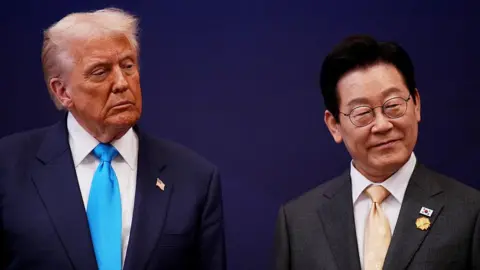
Trump Unilaterally Raises Tariffs to 25% On 27 January 2026 President Donald Trump posted on Truth Social that tariffs on South Korean automobiles, lumber, pharmaceuticals and other products will rise from 15% to 25% [1][2]. He argued Seoul had failed to honor the trade deal reached the previous year. No start‑date was given and the White House declined comment [2]. Under the rule, U.S. importers, not Korean exporters, will bear the tax [1].
Seoul Calls for Immediate Diplomatic Talks Industry Minister Kim Jung‑kwan, then in Canada, said he will meet U.S. Commerce Secretary Howard Lutnick as soon as possible to discuss the notice [1]. Presidential spokesperson Kang Yoo‑jung pledged a calm response and fast outreach, noting the trade minister will meet U.S. Trade Representative Jamieson Greer [2]. Seoul also demanded an official notice, which it has not received, and urged Washington to honor the October agreement that included a $350 bn investment pledge [1].
South Korean Markets React Sharply to Tariff News The Kospi index fell more than 1% before rebounding to close up 2.7% after early losses [1]. Hyundai and Kia shares initially dropped up to 6%, later ending about 1% lower; Hyundai Motor was down over 2.2% by mid‑morning local time [1][2]. Analysts expressed skepticism about enforceability, citing Trump’s recent reversal on extra European tariffs [1].
Deal Jeopardy and Pending Supreme Court Ruling The July 2025 U.S.–South Korea agreement, which capped tariffs at 10% for autos, is now at risk, threatening $132 billion of 2024 U.S. imports from Korea [2]. A pending Supreme Court case could limit the president’s authority to impose country‑specific tariffs, potentially blocking the 25% rates [2]. The move fits a broader pattern of aggressive trade pressure, including recent threats toward Canada and Europe, some of which have been retracted [1][2].
Sources
-
1.
BBC: Trump Raises South Korea Tariffs to 25%: Details Trump’s tariff announcement, Seoul’s demand for talks, trade‑flow data, market reactions, and notes the levy will be paid by U.S. importers .
-
2.
CNN: Trump raises South Korean tariffs to 25% amid trade dispute: Emphasizes the same tariff increase, Seoul’s calm diplomatic outreach, market tumble, jeopardy to the 2025 deal, and the pending Supreme Court case limiting presidential authority .
Timeline
2024 – South Korea ships roughly $123 billion of goods to the United States, with automobiles accounting for about $30 billion, making it the U.S.’s second‑largest export market after China[1].
July 2025 – The United States and South Korea sign a trade agreement that caps tariffs on Korean autos at 10 % and grants preferential rates, shielding $132 billion of 2024 U.S. imports from a steep hike[2].
Oct 2025 – The October deal pledges $350 billion in Korean investment in the United States, including funds earmarked for shipbuilding, as part of the broader trade framework[1].
Nov 26, 2025 – A follow‑up amendment submits the agreement to South Korea’s National Assembly, with lawmakers expected to approve it in February 2026[1].
2025‑2026 (pending) – The Supreme Court hears a case that could determine whether the president may impose sweeping, country‑specific tariffs; a ruling against the administration would block the 25 % rates on Korean goods[2].
Jan 26, 2026 – President Donald Trump posts on Truth Social that “the Korean legislature had not enacted the historic trade agreement,” announcing a raise of South Korean tariffs from 15 % to 25 % on autos, lumber, pharmaceuticals and other goods[2].
Jan 26, 2026 – The South Korean government says it has not received an official notice of the increase, demands urgent talks, and dispatches Industry Minister Kim Jung‑kwan to meet U.S. Commerce Secretary Howard Lutnick as soon as possible[1].
Jan 26, 2026 – Presidential spokesperson Kang Yoo‑jung declares South Korea will “respond calmly” and is ready to fulfill the tariff agreement, while the trade minister accelerates a U.S. visit to meet Trade Representative Jamieson Greer[2].
Jan 26, 2026 – Korean markets tumble: the Kospi slides more than 1 % before rebounding, Hyundai shares drop over 2.2 %, and Kia falls up to 6 %, reflecting investor anxiety over higher export costs[2].
Jan 27, 2026 – Analysts note skepticism that the tariff hike will be implemented, citing Trump’s recent reversal on extra European tariffs and the pending Supreme Court decision[1].
Feb 2026 (expected) – South Korea’s National Assembly is slated to pass the November amendment, which would trigger U.S. tariff cuts once South Korea begins its domestic approval process for the investment pledge[1].
2026 (future) – A Supreme Court ruling on presidential tariff authority is anticipated later in the year; a decision against the administration could halt the 25 % tariffs on South Korean imports[2].